7 Signs Your Aquarium Is Overstocked (And How to Fix It)
Cloudy water, fish gasping at the surface, frequent disease: these are classic signs of an overstocked tank. Here is how to diagnose and fix the problem.
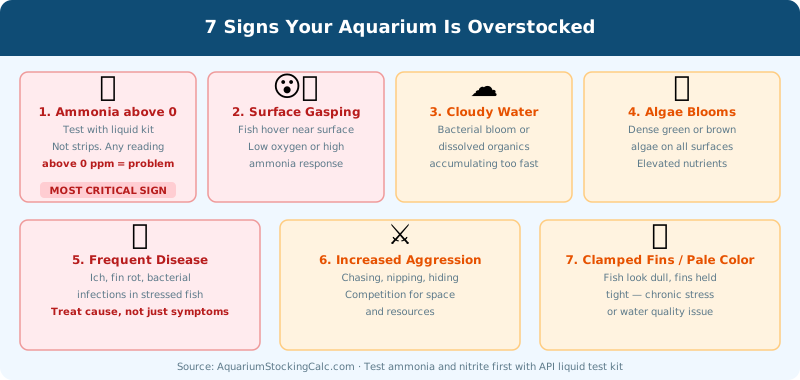
Most overstocked tanks don't crash overnight. They degrade slowly: water quality slipping week by week, fish getting gradually more stressed, disease outbreaks becoming more frequent. By the time hobbyists recognize something is wrong, the tank is often severely compromised.
Here are the 7 clearest signs that your aquarium is overstocked, and what to do about each one.
Sign 1: Ammonia or Nitrite Above 0 ppm
This is the most definitive sign. In a properly stocked, cycled tank, ammonia and nitrite should read exactly 0 ppm 24+ hours after a water change. Any detectable ammonia or nitrite in a cycled tank means your bioload exceeds your filtration capacity.
Test with a liquid test kit (API Master Test Kit), not strips. Strip tests are inaccurate enough to produce false negatives on ammonia even at 0.5–1.0 ppm, levels that cause chronic gill damage. If your liquid test shows ammonia above 0.25 ppm between water changes, your tank is overstocked relative to its filtration.
Immediate action: Dose Seachem Prime to detoxify ammonia and nitrite for 48 hours. Do a 25–30% water change. Test again 24 hours later. If ammonia returns before the next scheduled water change, you need to either add filtration, reduce fish count, or increase water change frequency.
Sign 2: Fish Gasping at the Water Surface
Fish gulping air or hovering near the surface waterfall/return output are exhibiting a classic low-oxygen or ammonia stress response. In an overstocked tank, waste decomposition and fish respiration consume dissolved oxygen faster than the surface exchange replenishes it.
This is a serious sign. Fish that look "fine" but spend unusual amounts of time near the surface are already under physiological stress. At ammonia levels above 0.5 ppm, gill tissue is being damaged; this damage may be permanent at chronic exposures.
Immediate action: Increase surface agitation (point a powerhead or filter return toward the surface), do a 30–40% water change immediately, test ammonia and nitrite.
Sign 3: Persistently Cloudy or Yellowed Water
A thin bacterial bloom (gray/white cloudiness) in a new or recently disturbed tank is normal and temporary. Persistent cloudiness or yellow-tinted water in an established tank indicates either a bacterial bloom from excess nutrients or dissolved organics accumulating faster than your filter can process them.
Yellow-tinted water is often caused by dissolved organic compounds (DOC) from fish waste, uneaten food, and decaying plant matter. In a properly stocked tank with adequate filtration, DOC levels stay low enough to maintain crystal-clear water.
Immediate action: Check for uneaten food (reduce feeding to what's consumed in 2 minutes), test water parameters, consider adding activated carbon temporarily to clear DOC, and assess whether you need to increase filtration.
Sign 4: Frequent Disease Outbreaks
Ich (Ichthyophthirius multifiliis), fin rot, velvet, and bacterial infections are all opportunistic; they target stressed fish with compromised immune systems. An overstocked tank keeps fish in a constant state of low-level stress from ammonia exposure, reduced oxygen, and overcrowding aggression, making them far more susceptible.
If you've treated for ich multiple times, or if one fish after another develops fin rot in what seemed like a healthy tank, overstocking is often the root cause. Treating the disease without fixing the underlying water quality problem means you'll keep treating disease indefinitely.
Immediate action: Separate sick fish to a quarantine tank, treat there. Address root cause (stocking, filtration, water changes) in the main tank before returning fish.
Sign 5: Algae Blooms
Moderate algae on glass is normal and easily controlled with scraping. But thick green or brown algae coating everything (glass, plants, décor, substrate) indicates elevated nutrients (nitrate and phosphate) in the water column. This is a sign that your filter isn't keeping up with bioload.
In a properly stocked and filtered tank with moderate lighting, algae growth is minimal and easily managed. Dense algae blooms are a water quality issue, not a lighting issue.
Immediate action: Test nitrate. If above 40 ppm, do a large water change (40–50%). Reduce fish food quantity. Consider adding live plants (particularly fast growers like hornwort) to compete with algae. Read our guide on live plants vs artificial plants for plant recommendations.
Sign 6: Aggression and Territory Conflicts
Fish that weren't previously aggressive start fighting, chasing, or nipping fins when overstocking increases competition for territory and resources. This is especially visible in cichlids, bettas, and species with defined territories, but can appear in community tanks when density becomes stressful.
Overcrowding stress triggers hormonal responses that increase aggression in most fish species. Some hobbyists counterintuitively overstock to "spread aggression" in cichlid tanks; this is a legitimate technique in specific scenarios but requires significantly heavier filtration.
Immediate action: For community tanks, removing fish is the most reliable fix. Rearranging décor breaks existing territories and can reduce aggression temporarily while you work on the stocking solution.
Sign 7: Slow Growth, Faded Colors, or Clamped Fins
Fish in a chronically overstocked tank don't thrive; they merely survive. Growth slows or stops, colors fade (especially in bettas and cichlids), and fish hold their fins clamped tight against their bodies (a sign of chronic stress or low-level disease). These signs appear gradually and are easy to miss compared to an acute disease outbreak.
Clamped fins are a reliable indicator of chronic water quality problems or internal parasites. If multiple fish in your tank are showing clamped fins, test water parameters first; this is more often a water quality issue than a parasite issue.
Immediate action: Full water parameter test (ammonia, nitrite, nitrate, pH, temperature). Compare actual stocking level against our aquarium stocking calculator recommendation. If you're significantly over the recommended count, begin a plan to reduce stocking.
How to Fix an Overstocked Tank
Option 1: Rehome fish. The simplest, most permanent fix. Return excess fish to the store (most pet stores accept healthy fish for store credit), give them to a local aquarium club, or find a new owner. Use our fish stocking calculator to determine which fish to keep and how many.
Option 2: Upgrade the tank. If you want to keep all the fish, move up to a larger tank. A 55-gallon community tank that's overstocked often runs well in a 75-gallon with the same fish.
Option 3: Upgrade filtration. Adding a second filter or replacing an undersized filter with a larger canister increases biological filtration capacity and may bring an overstocked tank back into balance. See our aquarium filtration guide for sizing recommendations.
Option 4: Increase water change frequency. Going from weekly 25% water changes to twice-weekly 30% changes can compensate for moderate overstocking short-term, but it's not a long-term solution and requires discipline.
The root cause of most overstocked tanks is the same: adding fish without calculating the bioload they produce. Use the aquarium stocking calculator before buying your next fish to know exactly what your tank can support.
AquariumStockingCalc Team
We build accurate, science-based aquarium calculators for hobbyists and professionals.
Related Guides
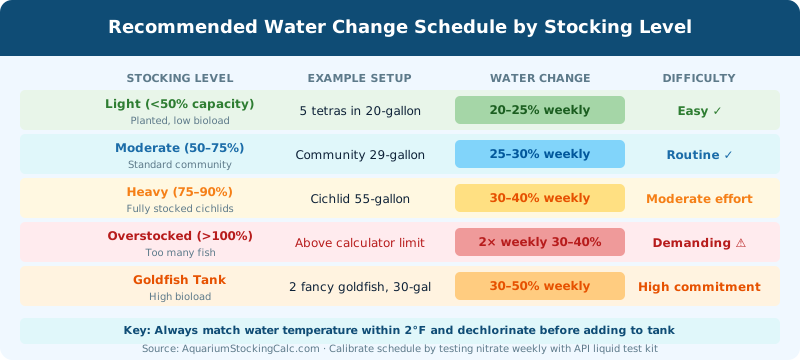
How Often Should You Change Aquarium Water? A Science-Based Guide
Most aquariums need a 25–30% water change weekly. But the right frequency de…
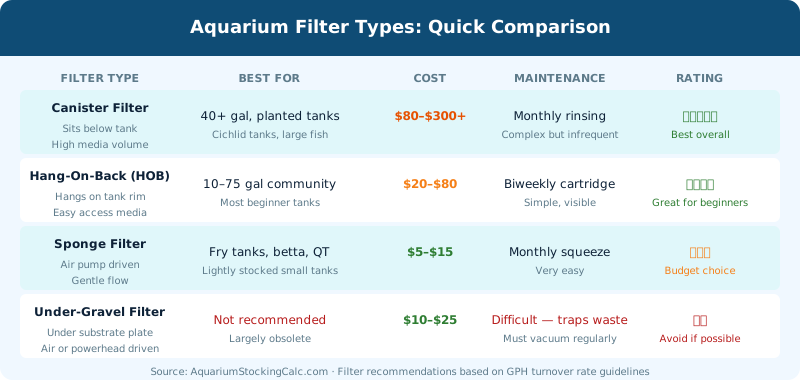
Aquarium Filtration Guide: How to Choose the Right Filter
Your filter is the most critical piece of aquarium equipment. Here is how to…
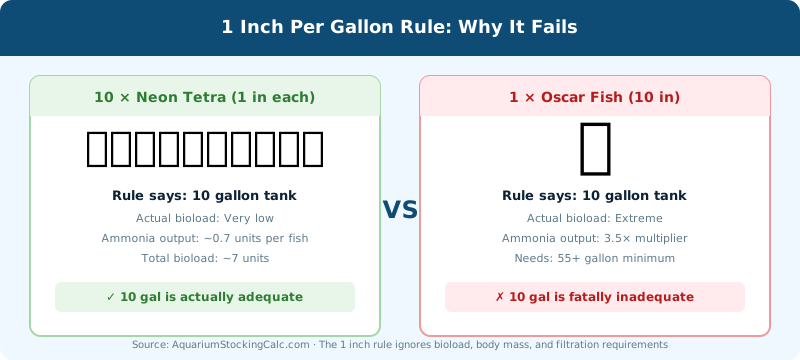
Why the 1 Inch Per Gallon Rule Is Dangerously Wrong
The 1-inch-per-gallon rule was never based on science. It ignores bioload, f…