Why the 1 Inch Per Gallon Rule Is Dangerously Wrong
The 1-inch-per-gallon rule was never based on science. It ignores bioload, fish body shape, and species-specific space needs. Here's what actually matters.
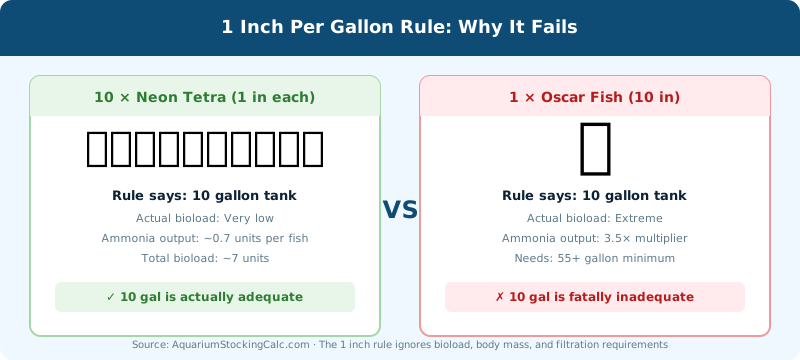
Walk into any fish store and ask how many fish you can keep in a 10-gallon tank. Most staff will tell you "one inch of fish per gallon, so about 10 inches of fish." That advice has been repeated for decades, it sounds logical, and it's almost completely wrong.
The 1-inch-per-gallon rule was a rough shorthand developed when aquarium fishkeeping was a hobby of mostly small tropical community fish. At that scale, with small schooling fish under 2 inches, the rule roughly works. But apply it to larger fish, high-bioload species, or odd body shapes, and it breaks down badly enough to kill fish.
Where the Rule Goes Wrong
It ignores bioload completely. A 6-inch goldfish produces roughly 10× more ammonia than a 6-inch group of neon tetras (six 1-inch fish). Bioload (the amount of waste a fish produces) is driven by metabolism, diet, and species, not just body length. Goldfish, oscars, and large cichlids produce waste completely out of proportion to what the rule predicts.
It ignores body mass. A 10-inch oscar is a massive, heavy-bodied fish that produces extreme amounts of waste. Ten 1-inch neon tetras are tiny, lightweight fish with very low metabolic output. The rule treats these as equivalent. They're not equivalent by any useful measure.
It ignores fish shape. A flat-bodied fish like an angelfish has much more body mass (and bioload) than a thin-bodied fish like a pencilfish of the same length. The rule doesn't account for this at all.
It doesn't account for filtration. The 1-inch rule assumes average filtration, but what "average" means has changed as filter technology has improved. A modern canister filter rated for 5× turnover per hour supports significantly more bioload than a basic HOB filter.
It ignores territory and space requirements. Some fish need horizontal swimming space that has nothing to do with bioload. A betta fish needs a minimum of 5 gallons not because of waste production but because of territory. A 2-inch betta in a 2-gallon tank is chronically stressed regardless of water quality.
Case Studies: Where the Rule Breaks Down Most
Oscar fish. An oscar grows to 12–14 inches and produces waste comparable to a small dog. A single adult oscar needs a minimum of 55 gallons; 75 is more realistic for long-term health. The 1-inch rule would suggest 12 gallons. Keeping an oscar in 12 gallons is a welfare issue.
Goldfish. A single common goldfish grows to 10–12 inches and produces enormous bioload (their digestive system is inefficient and they produce large amounts of ammonia-rich waste). Minimum requirement: 20–30 gallons per fish, with heavy filtration. The rule suggests 10 gallons. Pet stores that put 3 goldfish in a 10-gallon tank are setting up customers to fail.
Betta fish. At 2.5–3 inches, the rule suggests 2–3 gallons. But bettas held in tanks under 5 gallons are more prone to fin rot, disease, and early death. The minimum isn't about bioload; it's about temperature stability (small tanks swing rapidly) and territory.
Pleco. A common pleco grows to 18–24 inches. The rule suggests a 24-gallon tank. In reality, common plecos need a minimum of 100 gallons and often end up in ponds. Most "plecos" sold in pet stores as small juveniles will eventually need a pond-sized home.
What Should You Use Instead?
Species-specific stocking calculations based on actual space requirements and bioload are the correct approach. The key variables:
- Gallons per fish: the minimum water volume a single adult specimen of that species needs, based on territory and swimming space requirements
- Bioload multiplier: how much ammonia the species produces relative to its size, based on metabolic rate and diet
- Filtration capacity: what turnover rate your filter provides, and how that expands or contracts your stocking capacity
- Live plant density: whether plants are processing a significant portion of nitrogenous waste
Our aquarium stocking calculator combines all four variables into a single recommendation. For a 55-gallon tank with good filtration and moderate plants, stocking neon tetras gives you 34+ fish; stocking goldfish gives you 2. The difference is real bioload science, not a rule of thumb.
The Rule's One Legitimate Use
The 1-inch rule isn't entirely useless. It works reasonably well for small, similarly sized schooling fish in the 1–2 inch range with average bioload. A tank full of neon tetras, guppies, or zebra danios in roughly equal numbers won't stray far from the rule's predictions.
The problem is that beginners apply it universally, including to species where it produces catastrophically wrong results. If you're keeping only small schooling fish and your filter is adequate, the rule gives a rough ballpark. But it should never be used to plan stocking for goldfish, cichlids, large plecos, oscars, or any fish over 4 inches.
Signs You've Overstocked Using This Flawed Approach
If you followed the 1-inch rule and added fish that don't fit it, watch for these warning signs:
- Ammonia or nitrite readings above 0 ppm when tested 24+ hours after a water change
- Fish gasping at the water surface (surface agitation helps; it's a sign of low dissolved oxygen)
- Cloudy, yellow-tinted, or foul-smelling water
- Frequent disease outbreaks: bacterial infections and ich flare more readily in stressed, ammonia-exposed fish
- Sluggish, reclusive fish that aren't behaving normally
Read our 7 signs of an overstocked aquarium for a full diagnostic checklist. If your tank is overstocked, the fastest fix is either rehoming fish or upgrading to a larger tank with better filtration.
Use the fish stocking calculator to get accurate numbers based on your actual fish species and setup, not a decades-old rule of thumb.
AquariumStockingCalc Team
We build accurate, science-based aquarium calculators for hobbyists and professionals.
Related Guides
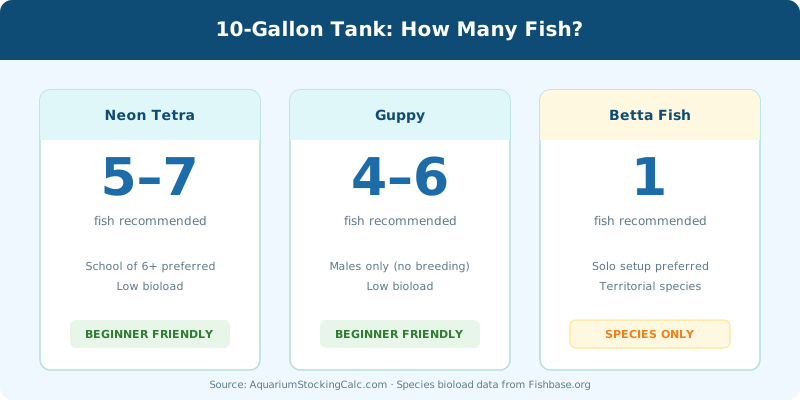
How Many Fish Can Live in a 10-Gallon Tank?
A 10-gallon tank can hold 5–8 small fish, 1 betta, or 1–2 dwarf cichlids, bu…
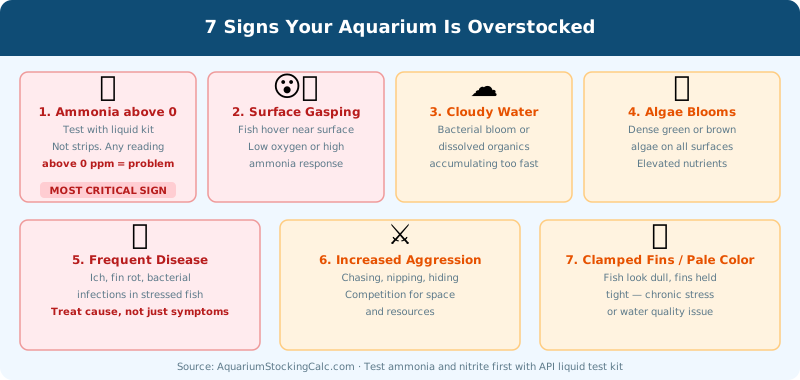
7 Signs Your Aquarium Is Overstocked (And How to Fix It)
Cloudy water, fish gasping at the surface, frequent disease: these are class…
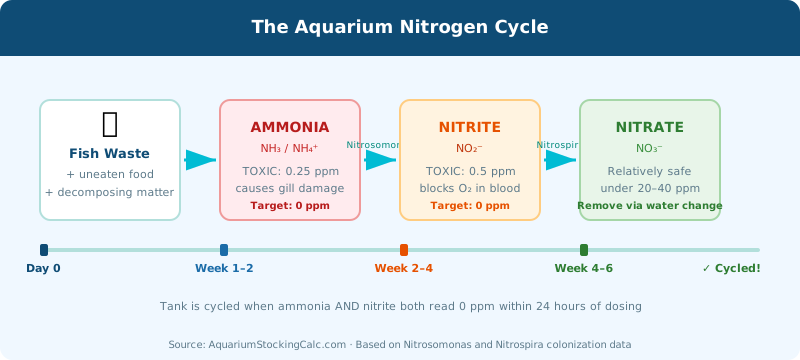
The Nitrogen Cycle: Why It Matters Before Adding Fish
The nitrogen cycle converts toxic ammonia into safer nitrate via beneficial …