How Often Should You Change Aquarium Water? A Science-Based Guide
Most aquariums need a 25–30% water change weekly. But the right frequency depends on your stocking level, filtration, and nitrate readings. Here is how to know.
Water changes are the most fundamental aquarium maintenance task, and the most commonly misunderstood. "Never change more than 25% at once" is a common hobbyist myth. "Change water weekly no matter what" is too simple. The right answer depends on what is actually happening in your tank, specifically how fast nitrate accumulates.
Why Water Changes Matter
The nitrogen cycle converts ammonia to nitrite to nitrate. Nitrate is the endpoint: it is far less toxic than ammonia or nitrite, but it accumulates continuously in a closed system. Most freshwater fish tolerate nitrate up to 40–80 ppm without acute harm, but chronic exposure above 20–30 ppm suppresses immune function, reduces growth rate, and shortens lifespan.
The only way to remove nitrate in a standard aquarium is through water changes (or plant uptake in heavily planted tanks). Filters do not remove nitrate; they produce it. The more fish you have and the more you feed them, the faster nitrate rises.
Water changes also remove dissolved organics, hormones, pheromones, and other compounds that do not show up on standard test kits but degrade water quality over time.
The Science-Based Approach: Test First, Schedule Second
The correct water change frequency for your specific tank is the frequency that keeps nitrate below 20 ppm between changes. Here is how to find it:
- Do a 30–40% water change. Test nitrate immediately after; it should be low (under 10 ppm).
- Wait 7 days without a water change. Test nitrate again.
- If nitrate is under 20 ppm after 7 days, weekly 25% changes are sufficient.
- If nitrate is 20–40 ppm after 7 days, increase to 30–35% weekly or twice-weekly changes.
- If nitrate is above 40 ppm after 7 days, you either need to reduce stocking, improve filtration, or change water twice weekly.
This approach takes 2 weeks to calibrate and gives you an evidence-based maintenance schedule instead of a guess.
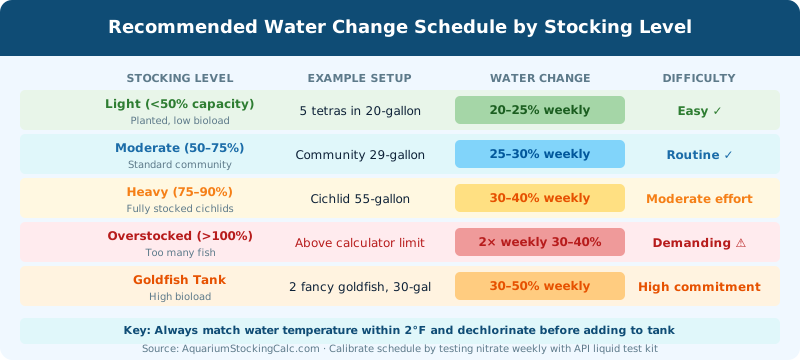
Recommended Water Change Schedules by Stocking Level
Based on typical stocking densities and filtration quality:
| Stocking Level | Fish Example | Recommended Changes |
|---|---|---|
| Light (under 50% capacity) | 5 tetras in a 20-gallon | 20–25% weekly |
| Moderate (50–75% capacity) | Community 29-gallon at calc recommendation | 25–30% weekly |
| Heavy (75–90% capacity) | Fully stocked cichlid tank | 30–40% weekly |
| Overstocked (above calculator limit) | Too many fish for tank size | 30–40% twice weekly |
| Heavily planted, light stocking | Planted nano tank | 15–20% weekly or biweekly |
| Goldfish tank | 2 fancy goldfish, 30-gallon | 30–50% weekly |
The stocking percentage here refers to your tank capacity as estimated by our aquarium stocking calculator. Knowing whether you are at 60% or 90% of your tank capacity helps you calibrate your maintenance schedule appropriately.
How Large Should Each Water Change Be?
The "never change more than 25% at once" advice persists because large water changes in improperly conditioned tap water could shock fish with dramatic temperature or chemistry differences. This was legitimate advice decades ago before modern dechlorinators.
With modern practices (using a water conditioner like Seachem Prime, matching temperature before adding water, and working with stable tap water), water changes of 40–50% are completely safe and sometimes necessary.
There is no upper limit on water change size if the replacement water is properly conditioned and temperature-matched. Some hobbyists (especially with goldfish and discus) do daily 30–50% water changes. Fish health improves, not declines, with this approach.
Temperature Matching: Critical But Often Ignored
Cold-shocking fish with a rapid temperature drop (more than 2–3°F) triggers ich outbreaks in fish that were previously asymptomatic carriers. This is the most common cause of sudden ich appearances in otherwise healthy tanks.
Always match replacement water temperature to within 1–2°F of tank temperature before adding it. Use a thermometer, not guesswork. A $5 submersible thermometer in your water change bucket is standard kit.
Dechlorination
Tap water contains chlorine or chloramine to kill bacteria, which is great for drinking water but lethal to your tank nitrogen cycle bacteria and harmful to fish. Always add a dechlorinator to new water before adding it to the tank.
Seachem Prime is the hobbyist standard: it neutralizes chlorine, chloramine, and temporarily detoxifies ammonia and nitrite (useful during a new tank cycle). Add it to the water bucket before adding water to the tank, or dose directly into the tank before the water change.
Do Planted Tanks Need Fewer Water Changes?
A heavily planted tank with fast-growing species (hornwort, water sprite, stem plants) genuinely absorbs nitrate, and many experienced planted tank hobbyists report stable nitrate below 10 ppm with less frequent water changes. This is real; the benefits of live plants for water quality are well-documented.
That said, even heavily planted tanks benefit from regular water changes to remove dissolved organics and replenish trace minerals. A minimum of biweekly 20% changes is recommended even in well-planted, lightly stocked tanks.
When Water Changes Are Not Enough
If you are doing large, frequent water changes and still seeing elevated ammonia or nitrite (not just nitrate), water changes alone are not solving the problem. The issue is an inadequate nitrogen cycle, either insufficient filter bacteria or a filter that cannot keep up with the bioload.
In that scenario: check filtration adequacy (see our aquarium filtration guide), dose beneficial bacteria (Seachem Stability, Dr. Tim's One and Only), and reduce feeding temporarily until ammonia and nitrite return to 0.
Use our aquarium stocking calculator to verify your tank is not fundamentally overstocked; water changes can compensate for mild overstocking temporarily, but they are not a substitute for adequate filtration and reasonable fish density.
AquariumStockingCalc Team
We build accurate, science-based aquarium calculators for hobbyists and professionals.
Related Guides
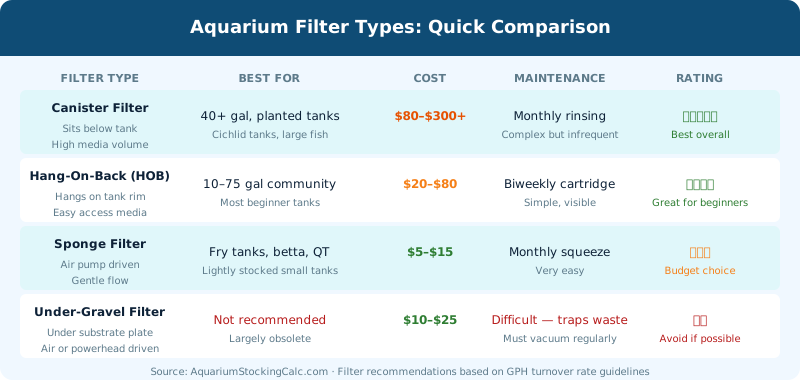
Aquarium Filtration Guide: How to Choose the Right Filter
Your filter is the most critical piece of aquarium equipment. Here is how to…
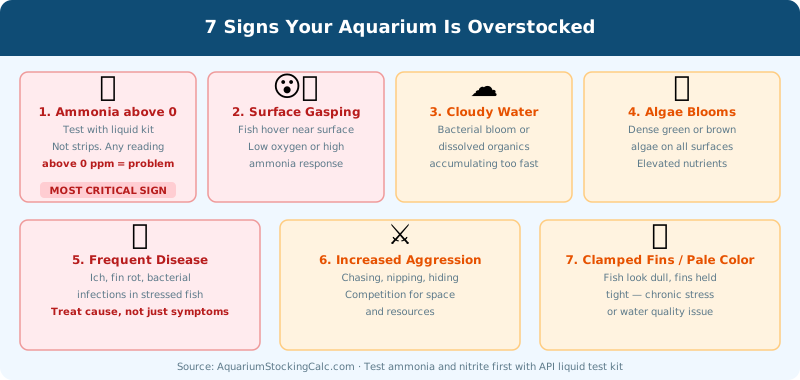
7 Signs Your Aquarium Is Overstocked (And How to Fix It)
Cloudy water, fish gasping at the surface, frequent disease: these are class…
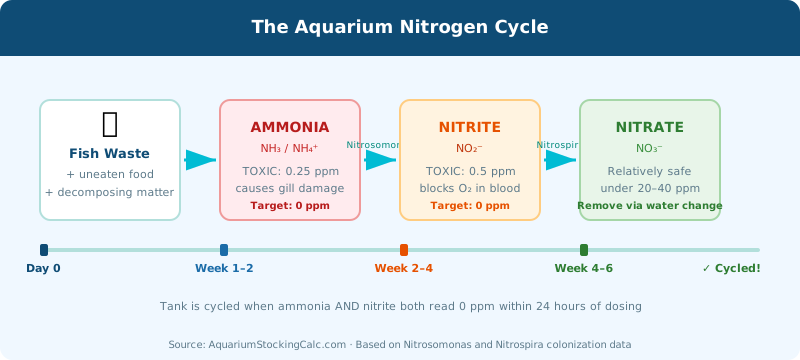
The Nitrogen Cycle: Why It Matters Before Adding Fish
The nitrogen cycle converts toxic ammonia into safer nitrate via beneficial …