Live Plants vs Artificial: Do Live Plants Actually Help Water Quality?
Live plants absorb nitrates, produce oxygen, and reduce algae. Artificial plants look good but do none of that. Here is what the science says for stocked tanks.
Walk into a fish store and you'll find two kinds of aquarium plants: plastic or silk fakes that look realistic and need no maintenance, and real live plants that need light, fertilizer, and occasional trimming. Which should you use?
If you only care about aesthetics, the choice is personal. But if you're trying to keep more fish, reduce water change frequency, or improve water quality, the science is clear: live plants make a real, measurable difference.
What Live Plants Actually Do
Live plants perform several functions that directly benefit a stocked aquarium:
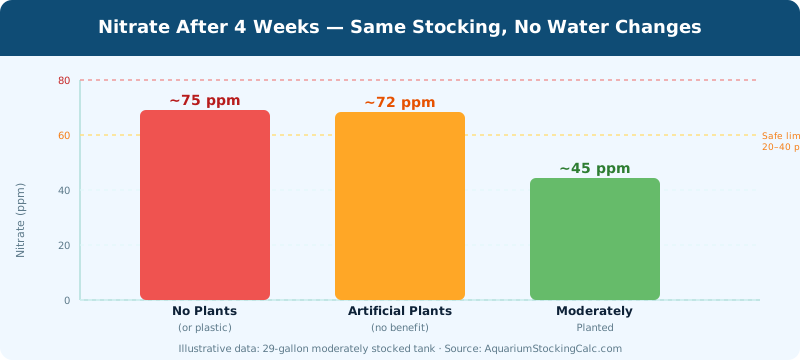
Nitrate absorption. Plants take up nitrate (NO₃⁻) as a nitrogen source for growth. In a heavily planted tank with fast-growing species, measurable nitrate removal between water changes is possible; some hobbyists report weekly water test nitrate readings under 10 ppm with no water changes in a well-planted, moderately stocked tank. Our aquarium stocking calculator gives a 25% stocking increase for heavily planted tanks precisely because of this effect.
Oxygen production. During daylight hours (or when lights are on), plants photosynthesize and release dissolved oxygen. This benefits fish directly, supports aerobic nitrifying bacteria, and can reduce the need for surface agitation in well-planted tanks.
Ammonia uptake. During active growth, plants can also absorb ammonia directly, before it enters the nitrogen cycle. This effect is smaller than nitrate absorption but adds a meaningful buffer in lightly filtered setups.
Algae competition. Plants consume the same nutrients algae need: nitrate, phosphate, CO2, and light. A densely planted tank with adequate light and fertilization often remains algae-free because the plants outcompete algae for resources. A bare or sparsely planted tank with moderate nutrients will grow algae instead.
Stress reduction. Cover and hiding spots reduce stress in prey species (small tetras, shrimp, bottom dwellers). Fish in bare tanks with nowhere to hide show elevated cortisol responses and more territorial aggression.
What Artificial Plants Do (and Don't Do)
Plastic and silk plants provide cover and visual interest without any of the water-quality benefits. They look nice. They don't break down. They don't need lighting. They do nothing for water chemistry.
In a heavily stocked tank, artificial plants offer no benefit over bare décor for water quality purposes. The fish get cover, but ammonia accumulates exactly as it would in a bare tank. You're still dependent entirely on filtration and water changes.
One practical advantage of artificial plants: they work in any lighting condition, including the low-light situations where live plants struggle. For tanks near windows or under office lighting, artificial plants may be more practical.
Best Live Plants for Stocked Tanks
Not all live plants are equally effective at improving water quality. Fast-growing stem plants and floating plants do the most work. Here's what to grow if water quality is your goal:
Hornwort (Ceratophyllum demersum): the fastest-growing aquarium plant in most conditions. Floats or can be anchored. Extremely effective at nitrate removal. Requires no substrate planting and tolerates a wide temperature and pH range. Can shed fine needles when adjusting to a new tank.
Water sprite (Ceratopteris thalictroides): a lacy, fast-growing stem plant that works floating or planted. Very effective at nutrient uptake. Tolerates low light better than most fast growers.
Amazon sword (Echinodorus bleheri): a large rosette plant that anchors in substrate. Slower growing than stem plants but provides excellent cover and does meaningful nutrient uptake over time. Needs moderate light and root tabs.
Java fern (Microsorum pteropus) and anubias (Anubias barteri): slow-growing, low-light species that attach to wood or rock. They don't contribute much to nitrate removal but are nearly indestructible and require no CO2 or fertilizer. Good for dimly lit tanks.
Duckweed (Lemna minor): a tiny floating plant that multiplies rapidly and removes nitrates aggressively. Some hobbyists love it; many hate it (it spreads everywhere). Highly effective for nutrient export if you're willing to skim it off regularly.
What You Need to Keep Live Plants
Lighting: Most live plants need 8–10 hours of moderate-intensity light per day. A quality LED plant light (like the Fluval Plant Nano or Nicrew Plant LED) over a 20–55 gallon tank runs $20–$60 and provides enough light for low-to-medium light plants without CO2 injection.
Fertilizer: Plants need trace nutrients (iron, potassium, and macronutrients) that tap water often doesn't provide. Liquid fertilizers (Seachem Flourish Comprehensive, API Leaf Zone) dosed weekly cover most deficiencies. Root-feeding plants like amazon swords also benefit from root tabs pressed into the substrate near their roots.
CO2: High-growth plants benefit from CO2 injection, but it's optional. Most fast growers (hornwort, water sprite) grow well without it in a stocked tank, which provides some CO2 from fish respiration.
Substrate: Fast-growing stem plants can be planted in plain aquarium gravel with root tabs, or in a specialized substrate like Fluval Stratum or CaribSea Eco-Complete. Floating plants need no substrate at all.
The Practical Verdict
For most hobbyists keeping a community tank, a mix of fast-growing floating and stem plants is the best approach. Add a few bunches of hornwort or water sprite, some java fern on driftwood, and possibly a couple of amazon swords. You'll see measurable nitrate reduction within a month and your fish will use the cover.
If you can't commit to the maintenance or can't provide adequate lighting, artificial plants are fine for aesthetics; just accept that your water quality depends entirely on filtration and water changes.
Run your planted stocking plan through our fish stocking calculator; the "Heavily Planted" setting reflects the genuine water quality benefit of dense live plant growth. Then check our water change schedule guide to see how live plants affect your maintenance routine.
AquariumStockingCalc Team
We build accurate, science-based aquarium calculators for hobbyists and professionals.
Related Guides
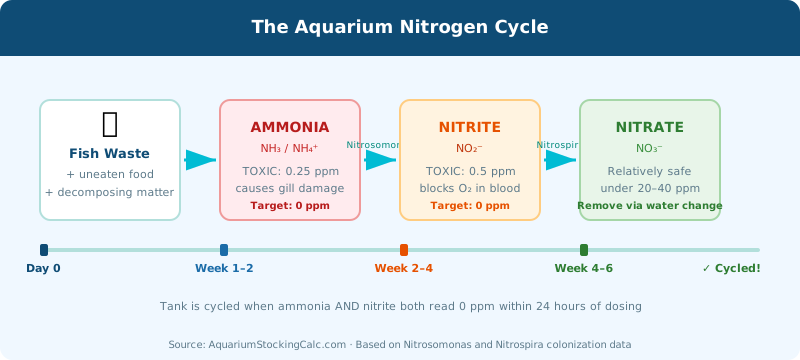
The Nitrogen Cycle: Why It Matters Before Adding Fish
The nitrogen cycle converts toxic ammonia into safer nitrate via beneficial …
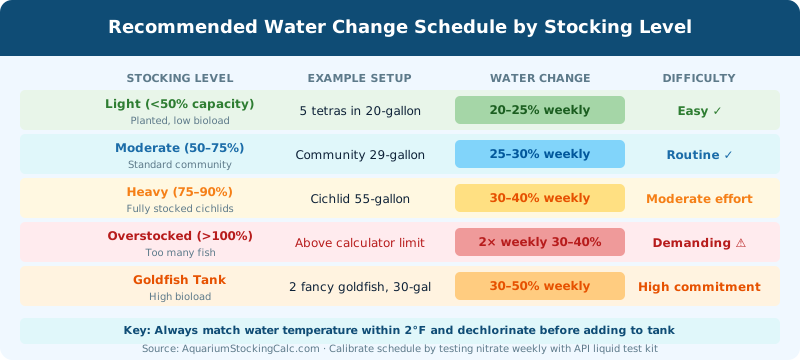
How Often Should You Change Aquarium Water? A Science-Based Guide
Most aquariums need a 25–30% water change weekly. But the right frequency de…
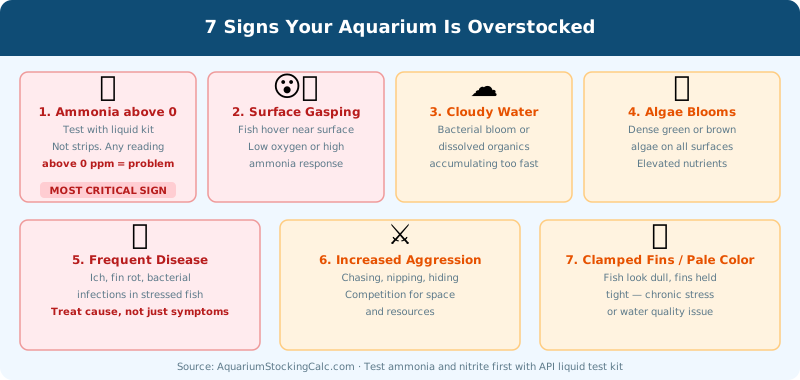
7 Signs Your Aquarium Is Overstocked (And How to Fix It)
Cloudy water, fish gasping at the surface, frequent disease: these are class…