The Nitrogen Cycle: Why It Matters Before Adding Fish
The nitrogen cycle converts toxic ammonia into safer nitrate via beneficial bacteria. Without it, even a small number of fish will die within days in a new tank.
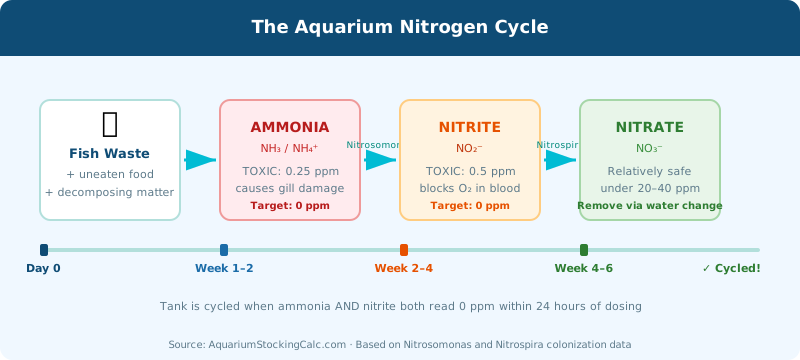
Every new aquarium goes through the nitrogen cycle before it can safely house fish. Skip this step and your fish will die. Not from disease, not from aggression, but from their own waste accumulating in water that has no biological mechanism to break it down.
The nitrogen cycle is the process by which two species of beneficial bacteria establish themselves in your filter media and on tank surfaces. These bacteria convert ammonia (toxic) to nitrite (also toxic) to nitrate (tolerable at low concentrations). Once both bacterial colonies are established, your tank is "cycled" and ready for fish.
What Happens Without the Cycle
When you add fish to an uncycled tank, ammonia immediately starts accumulating from fish waste and uneaten food. With no bacteria to process it, levels rise quickly. At 0.5 ppm, fish experience gill irritation and chronic stress. At 2 ppm, tissue damage begins. At 4–5 ppm, death follows within hours.
This phenomenon is called "new tank syndrome," and it's responsible for a huge percentage of fish deaths among new hobbyists. The fish seemed fine for a week, then crashed. That timeline matches exactly the ammonia accumulation curve in an uncycled tank.
The Two Bacterial Colonies
The nitrogen cycle involves two groups of bacteria:
Nitrosomonas (and related genera) oxidize ammonia (NH₃) to nitrite (NO₂⁻). These establish within 1–2 weeks of ammonia being present. Nitrite is also highly toxic; at 0.5 ppm, it interferes with oxygen transport in fish blood (methemoglobinemia).
Nitrospira (and related genera) oxidize nitrite to nitrate (NO₃⁻). These take longer to establish, typically 2 to 4 weeks, and are the rate-limiting step in most tank cycles. Nitrate is relatively benign at concentrations under 20–40 ppm, which is why partial water changes (rather than complete removal) are the standard maintenance practice.
Both bacterial colonies live primarily in your filter media, where there's a constant flow of oxygenated, ammonia-rich water. They also colonize substrate, décor, and glass surfaces to a lesser extent.
How Long Does Cycling Take?
A fishless nitrogen cycle typically takes 4–6 weeks from start to finish. The timeline:
| Week | What's Happening |
|---|---|
| Week 1 | Ammonia added; no bacteria yet; levels rising |
| Week 1–2 | Nitrosomonas begin establishing; ammonia starts converting |
| Week 2–3 | Nitrite appears and rises as Nitrosomonas multiply |
| Week 3–5 | Nitrospira establish; nitrite begins falling |
| Week 5–6 | Ammonia → 0 ppm; nitrite → 0 ppm; nitrate rising |
The cycle is complete when you add ammonia (or ammonia-producing food) and both ammonia and nitrite return to 0 ppm within 24–48 hours. Nitrate will be elevated; do a large water change (50–75%) before adding fish.
Methods for Cycling Your Tank
Fishless cycling (recommended): Add pure ammonia (Dr. Tim's or similar) to dose your tank to 2–4 ppm. Dose daily or every few days to maintain that level as bacteria consume it. This is faster and doesn't harm fish. Most 10–55 gallon tanks cycle completely in 4–5 weeks this way.
Bacteria supplements: Products like Tetra SafeStart Plus, Seachem Stability, and Dr. Tim's One and Only contain live nitrifying bacteria. Used correctly with a fishless cycle, they can cut cycling time to 2–3 weeks. Results vary by brand and storage conditions; the bacteria are living organisms and don't survive indefinitely on a shelf.
Seeded media: The fastest method. Take filter media, gravel, or décor from an established cycled tank and add it to your new tank. A handful of cycled filter media can cycle a new tank in 1–2 weeks because you're transplanting an already-established bacterial colony.
Fish-in cycling (emergency only): If you've already added fish to an uncycled tank, dose Seachem Prime every 48 hours to detoxify ammonia and nitrite while the cycle establishes. Do daily 25–50% water changes to keep ammonia and nitrite below 0.5 ppm. This is stressful for fish but survivable with diligent water changes.
How to Know When Your Tank Is Cycled
You need a liquid test kit, not strips. Test strips give inaccurate readings on ammonia and nitrite that can give you dangerous false confidence. The API Freshwater Master Test Kit is the hobbyist standard and costs around $30.
Target readings for a fully cycled tank ready for fish: - Ammonia: 0 ppm - Nitrite: 0 ppm - Nitrate: under 20 ppm (do a 50% water change if higher) - pH: stable (within 0.1–0.2 units of your water source)
Test on two consecutive days to confirm; a single reading can be misleading if you tested right after adding ammonia.
What Disrupts the Cycle?
Once established, your bacterial colonies are fairly robust but can be disrupted by:
- Antibiotics in the water column: fatal to bacteria; use a hospital tank for sick fish treatment
- Chlorine/chloramine: always dechlorinate tap water before adding it to your tank (Seachem Prime or similar)
- Cleaning filter media in tap water: this destroys the bacterial colony; rinse only in tank water
- Removing all filter media: this obviously collapses the cycle; keep biological media when upgrading
If your tank loses its cycle (ammonia spikes after months of stability), restart the cycling process with bacteria supplements and treat it as a new tank. Our aquarium filtration guide covers how to maintain filter media to protect your bacterial colony.
Planning Your Stocking Around the Cycle
Knowing the nitrogen cycle is only half the picture. Once your tank is cycled, you still need to stock conservatively. Adding too many fish at once overwhelms even a well-established bacterial colony; it takes time for bacteria populations to grow to match increased bioload.
Add fish in groups over several weeks. After each addition, wait 2 weeks and test water before adding more. This gives bacteria time to multiply to match the new ammonia load.
Use our aquarium stocking calculator to set a target fish count before you start buying. Know your ceiling before you hit it.
AquariumStockingCalc Team
We build accurate, science-based aquarium calculators for hobbyists and professionals.
Related Guides
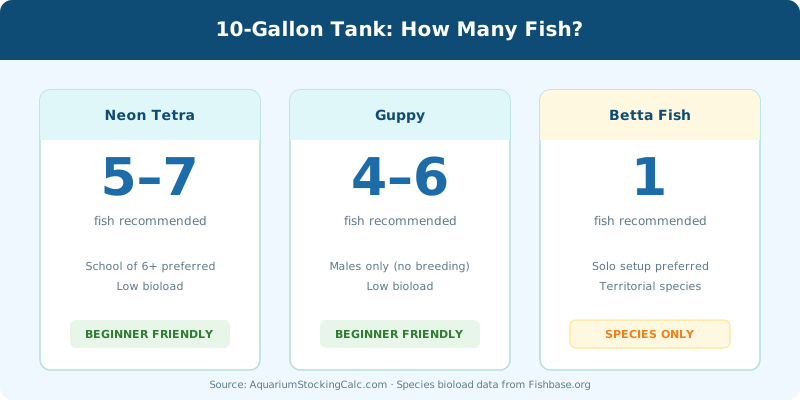
How Many Fish Can Live in a 10-Gallon Tank?
A 10-gallon tank can hold 5–8 small fish, 1 betta, or 1–2 dwarf cichlids, bu…
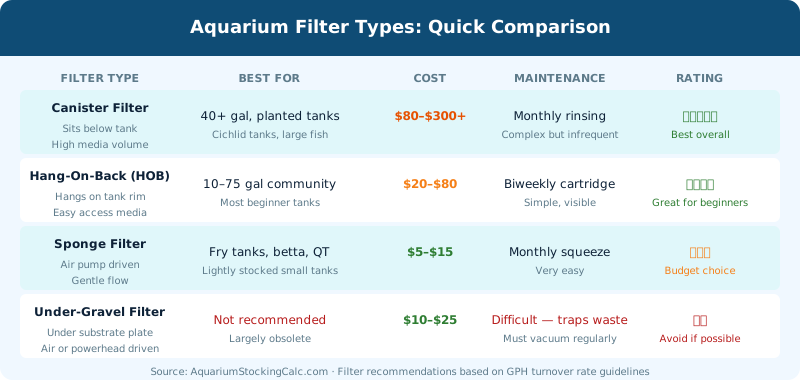
Aquarium Filtration Guide: How to Choose the Right Filter
Your filter is the most critical piece of aquarium equipment. Here is how to…
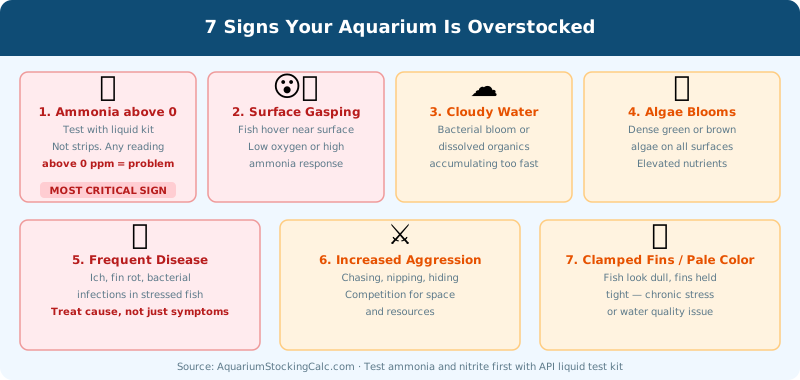
7 Signs Your Aquarium Is Overstocked (And How to Fix It)
Cloudy water, fish gasping at the surface, frequent disease: these are class…