Oscar Fish Tank Size: What You Need Before You Buy
Oscar fish grow to 12–14 inches and need a minimum 55-gallon tank as adults. Here is everything you need to know before buying an oscar for your aquarium.
Oscar fish (Astronotus ocellatus) are one of the most popular large cichlids in the aquarium hobby. They are intelligent, interactive, and capable of recognizing their owners. They also grow to 12–14 inches, produce extreme amounts of waste, and are regularly sold as 2-inch juveniles to hobbyists who have no idea what they have bought.
Before you buy an oscar, you need to understand what it will become, not what it looks like in the store today.
How Big Do Oscar Fish Get?
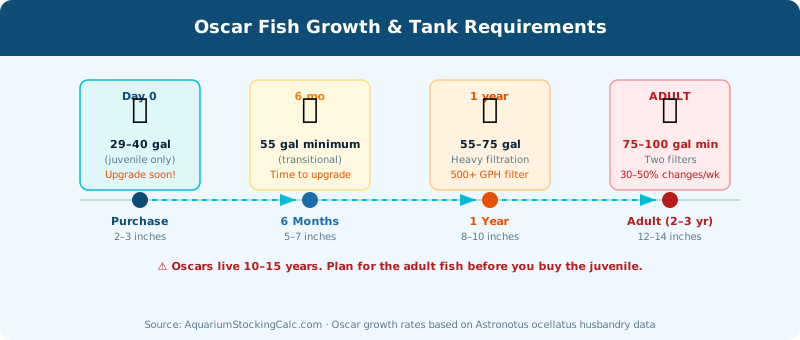
Oscars grow quickly and reach impressive sizes:
- At purchase (typical): 2–3 inches
- 6 months: 5–7 inches
- 1 year: 8–10 inches
- Adult (2–3 years): 12–14 inches, sometimes up to 16 inches in ideal conditions
That 2-inch fish in the pet store bag will be the size of a dinner plate within two years. Growth rate depends heavily on feeding frequency, tank size, and water quality; oscars in cramped conditions grow slower but do not stay small. "Stunting" a fish by underproviding space causes organ compression and shortens lifespan, not a smaller fish.
Minimum Tank Size for Oscar Fish
Single oscar: 55 gallons minimum as an adult, 75 gallons recommended for long-term health. Many oscar keepers use 75–100 gallon tanks to provide adequate swimming space and dilution for the fish's extreme bioload.
Two oscars: 100–125 gallons minimum. Oscars can be kept in pairs but often fight unless established together from a young age or if a compatible male-female pair forms. Expect territory disputes.
Oscar with tankmates: Add 20–30 gallons per additional large fish. Oscar tankmates must be similar in size (large cichlids, large catfish, bichirs), as oscars eat anything that fits in their mouths.
Our aquarium stocking calculator assigns oscars the highest bioload rating on the fish list (3.5×) because of their extreme waste production. For a 55-gallon tank with excellent filtration, the calculator recommends 1 oscar, not because of space, but because the bioload of a single adult oscar approaches the maximum a well-filtered 55-gallon can handle.
Filtration Requirements: The Critical Factor
Oscars are exceptionally messy. They eat heavily, produce large volumes of waste, and are often fed large pellets or whole foods (earthworms, crickets, feeder fish) that add significant organic load to the water.
Minimum filtration for a 55-gallon oscar tank: 330–550 GPH (6–10× turnover). Most oscar keepers run two separate filters for redundancy; if one fails, the other prevents an immediate ammonia crash.
Common filter setup for a single-oscar 75-gallon tank: - One canister filter rated 300–400 GPH (Fluval 407, Eheim Professional 4) - One hang-on-back filter rated 200–300 GPH (Marineland Penguin 350, Aquaclear 70) - Combined turnover: 500–700 GPH (6–9×)
See our aquarium filtration guide for detailed filter sizing guidance.
The Oscar and the "Starter Fish" Misconception
Oscars are frequently marketed in pet stores alongside small tetras and guppies, displayed in similar tank sizes, and sold to beginners who assume they are similar in care requirements. They are not.
An oscar is a long-lived, large, intelligent, high-maintenance fish that requires: - A 55–75+ gallon tank - Heavy duty filtration ($100–$300+ in equipment) - 30–50% weekly water changes - A diet of quality large pellets supplemented with whole foods - A tank without fish small enough to eat - 10–15 years of care (oscar lifespan with proper husbandry)
This is a commitment equivalent to a medium-sized pet. If you can provide that, oscars are extraordinary pets; some learn to take food from their owner's hand, recognize individual people, and rearrange décor to their liking. If you cannot provide 55+ gallons and heavy filtration, choose a different species.
What Can Live With an Oscar?
Oscar tankmates need to be large enough not to be eaten and tough enough to hold their own. Options include:
- Large South American cichlids: Severum, Jack Dempsey (can be aggressive), Green Terror (very aggressive, for experienced keepers only)
- Large catfish: Plecos (common pleco in a large enough tank, armored catfish), striped raphael catfish
- Bichirs: Polypterus species, bottom-dwelling, armored, and unpalatable to oscars
- Silver dollar fish: Fast schooling fish that are too large to eat and too quick to catch
Avoid: any fish under 4 inches, fish with flowing fins (oscar will attack), multiple oscars unless raised together.
Tank Setup for Oscar Fish
Oscars are destructive. They uproot plants, move gravel, and rearrange décor. Plan accordingly:
- Substrate: Large smooth river rocks, pea gravel, or bare bottom (bare bottom is easiest to clean, but oscars prefer some substrate)
- Plants: Skip live plants. They will be uprooted immediately. Some hobbyists use potted plants with rocks around the base. Most oscar tanks use artificial plants or no plants.
- Décor: Large smooth rocks, PVC pipe for hiding. Avoid hollow decorations that trap waste.
- Lighting: Standard aquarium LED; oscars have no specific lighting requirements
- Lid: Required, as oscars jump when startled
Running the Numbers
A 75-gallon tank with excellent filtration, no plants, and one adult oscar at calculator defaults: the stocking calculator gives you approximately 1 oscar at 64% capacity. Adding a second oscar puts you well over capacity for that tank size.
Use the fish stocking calculator to find your specific setup's capacity. For oscar fish specifically, the filtration quality setting has a major effect on the result; the difference between "average" and "excellent" filtration is the difference between a manageable setup and a chronic water quality problem.
AquariumStockingCalc Team
We build accurate, science-based aquarium calculators for hobbyists and professionals.
Related Guides
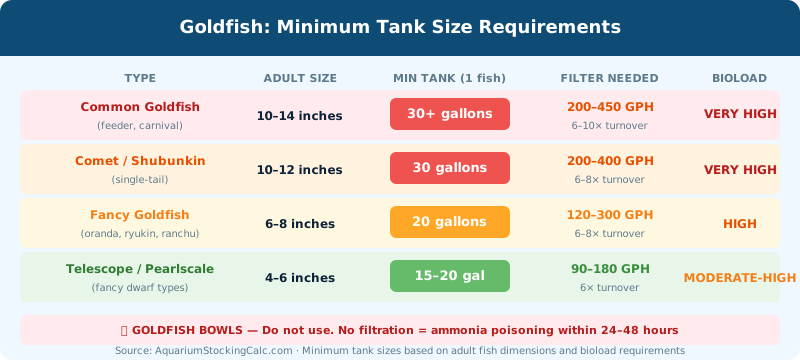
Why Goldfish Need More Space Than You Think: Tank Size Guide
A goldfish in a bowl is a goldfish that will die young. Single-tail goldfish…
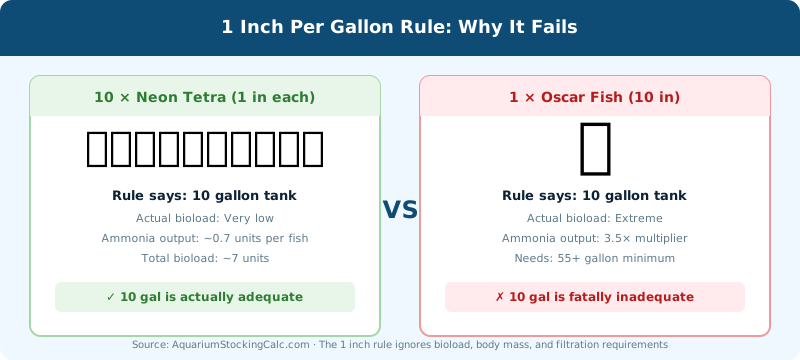
Why the 1 Inch Per Gallon Rule Is Dangerously Wrong
The 1-inch-per-gallon rule was never based on science. It ignores bioload, f…
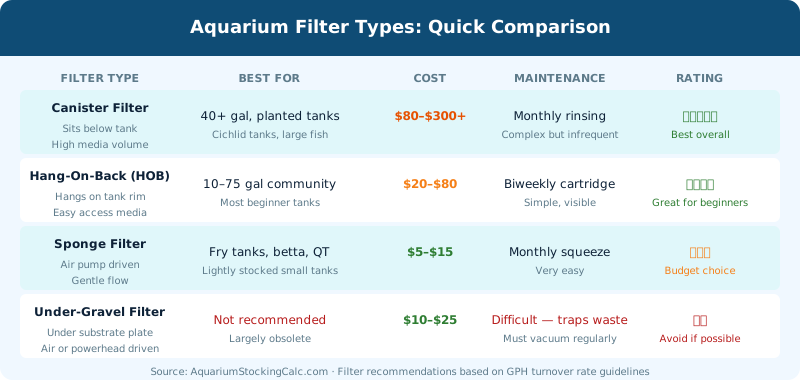
Aquarium Filtration Guide: How to Choose the Right Filter
Your filter is the most critical piece of aquarium equipment. Here is how to…