How to Set Up a Community Fish Tank: Species Compatibility Guide
A thriving community tank requires compatible water chemistry, temperament, and swimming levels. Here is how to plan species groups that actually get along.
A community aquarium is any tank that houses multiple fish species together peacefully. Done well, a community tank is a miniature ecosystem with activity at every level, and one of the most rewarding setups in the hobby. Done poorly, it's a recipe for aggression, disease, and loss.
Successful community tanks are built around three principles: compatible water chemistry, matching temperaments, and fish occupying different swimming zones. Here's how to plan a community setup that actually works.
Step 1: Start With Water Chemistry
Before picking fish, know your tap water. Test pH, hardness (GH and KH), and temperature range with a liquid test kit. Your local fish store should also have tap water data on file.
Most tropical community fish fall into two broad water chemistry categories:
Soft, acidic water fish (South American / Southeast Asian origins): - pH: 6.0–7.2 - GH: 2–12 dGH - Examples: neon tetras, cardinal tetras, discus, corydoras, harlequin rasboras, betta fish
Harder, more alkaline water fish (African / Central American origins): - pH: 7.0–8.5 - GH: 8–25 dGH - Examples: African cichlids, livebearers (guppies, mollies, platies), rainbowfish, many barbs
Mixing these groups isn't impossible, but it requires compromise: setting water parameters in the middle that neither group truly thrives in, which causes chronic low-level stress. The cleanest approach is to pick one chemistry profile and choose all your fish from species that prefer it.
Step 2: Match Temperaments
Fish temperament runs from completely peaceful to highly aggressive. Community tanks work best with fish that fall in the same range:
Peaceful community fish (ideal for mixed species setups): - Tetras (neon, cardinal, ember, rummy nose) - Rasboras (harlequin, lambchop, espei) - Corydoras catfish - Otocinclus - Livebearers (platy, swordtail, guppy; not with bettas) - Bristlenose pleco - Cherry barbs
Semi-aggressive fish (can work in community with careful planning): - Angelfish (peaceful with most species but will eat small tetras) - Dwarf cichlids (apistogramma, german blue ram): territorial but manageable - Tiger barbs (fin nippers; keep only with other fast fish) - Boesemani rainbowfish (active, can stress slow fish)
Aggressive or species-only fish (not suitable for typical community tanks): - Betta (with most fish, especially males) - Oscar - Most African cichlids (highly territorial, specific water chemistry needs) - Jack Dempsey - Flowerhorn
Step 3: Use All Three Swimming Levels
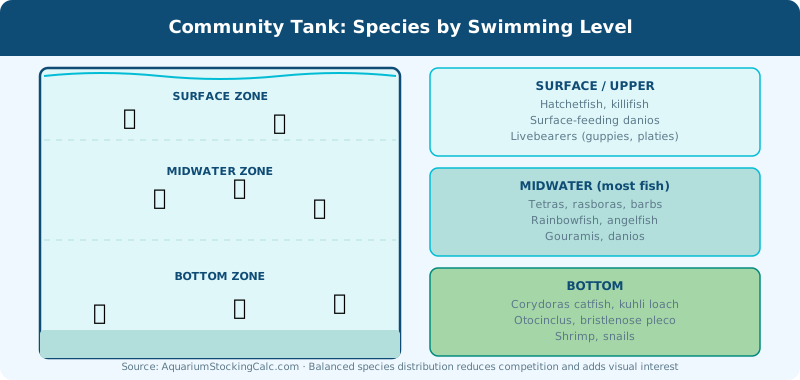
A well-designed community tank has fish occupying the top, middle, and bottom of the water column. This reduces competition for space, adds visual interest, and makes better use of the tank volume.
Surface/upper layer: - Hatchetfish, killifish, small danios, surface-feeding livebearers
Midwater (where most activity happens): - Tetras, rasboras, barbs, rainbowfish, angelfish, danios
Bottom layer: - Corydoras catfish, loaches (kuhli, hillstream), otocinclus, dwarf plecos, shrimp, snails
A 29-gallon community tank might use: 8 neon tetras (midwater) + 8 harlequin rasboras (midwater) + 5 corydoras (bottom) + 1 bristlenose pleco (bottom). That's a full, active tank at every level with compatible water chemistry and temperament.
Step 4: Calculate Stocking Before Buying
Once you've chosen your species combination, run it through our aquarium stocking calculator to confirm your tank and filter can support the bioload. Different species have different waste production rates; a mix of corydoras and tetras produces much less bioload than the same number of large cichlids.
For the example above (29-gallon, 8 tetras + 8 rasboras + 5 corydoras + 1 pleco), a filter rated for 90–145 GPH with moderate plant coverage handles the bioload comfortably. Going above that count or adding higher-bioload species requires a filter upgrade.
Common Compatibility Mistakes
Mixing bettas with guppies or similar fish. Guppy males have flowing fins similar to rival bettas, making betta attacks nearly certain. Betta females are somewhat more tolerant but still risky.
Adding angelfish to a small tetra tank. Angelfish are cichlids and will eat neon tetras that fit in their mouths. A 6-inch angelfish can eat 1.5-inch tetras. Either keep very large schools of neon tetras (making predation less likely), or use larger tetra species (black skirt, diamond, Congo tetras) that are too big to eat.
Mixing cichlids of different temperament. African cichlids from Lake Malawi and Lake Tanganyika have very different territorial behavior. Even among Malawi cichlids, mixing mbuna (highly aggressive, algae-grazing) with peacocks/haps (open-water, less aggressive) often results in the mbuna dominating.
Keeping fin-nippers with long-finned fish. Tiger barbs, serpae tetras, and some tetra species are notorious fin-nippers. Never keep them with bettas, fancy guppies, or any slow-moving fish with long flowing fins. Even a single fin nipper can destroy a betta's fins within days.
Impulse-buying fish without researching adult size. That 2-inch "iridescent shark" at the fish store will reach 3–4 feet as an adult and belongs in a river, not a fish tank. Always research adult size before buying.
A Sample Stocking Plan by Tank Size
20-gallon long (neutral water, 72–78°F): - 8 harlequin rasboras - 4 peppered corydoras - 1 bristlenose pleco (once tank is 6 months old)
55-gallon neutral community: - 10 neon tetras - 8 harlequin rasboras - 6 corydoras aeneus - 2 dwarf gourami (1 male) - 1 bristlenose pleco
75-gallon soft-water South American: - 12 cardinal tetras - 8 rummy-nose tetras - 6 corydoras sterbai - 4 german blue rams - 2 apistogramma cacatuoides (1 male + 1 female)
Each of these plans uses complementary swimming levels, compatible water chemistry, and manageable bioload. Use the stocking calculator to verify before you buy. Then read our guide to the best beginner fish to pick individual species that work with your local water chemistry.
AquariumStockingCalc Team
We build accurate, science-based aquarium calculators for hobbyists and professionals.
Related Guides
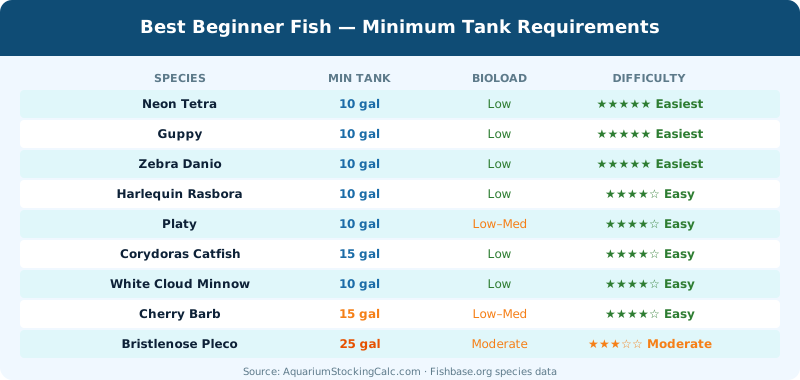
10 Best Freshwater Fish for Beginners (With Tank Requirements)
The best beginner fish are hardy, peaceful, and forgiving of minor water che…
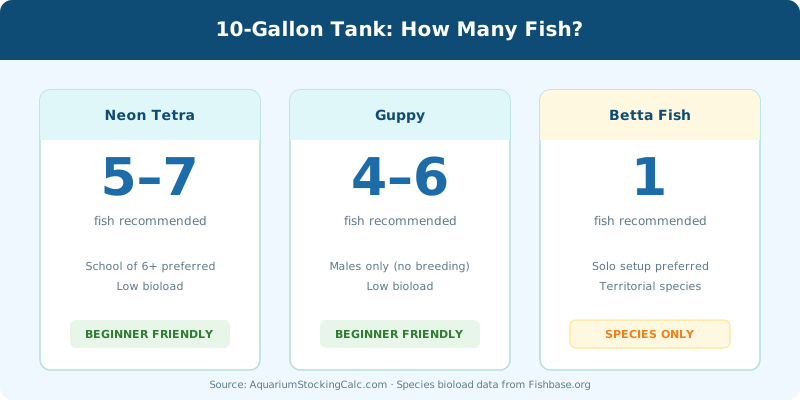
How Many Fish Can Live in a 10-Gallon Tank?
A 10-gallon tank can hold 5–8 small fish, 1 betta, or 1–2 dwarf cichlids, bu…
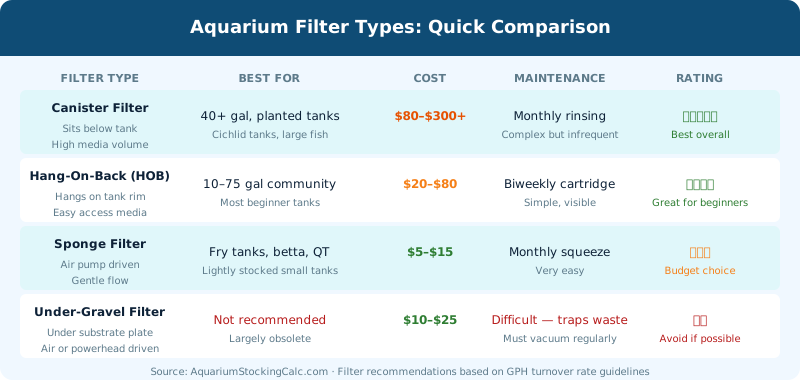
Aquarium Filtration Guide: How to Choose the Right Filter
Your filter is the most critical piece of aquarium equipment. Here is how to…