10 Best Freshwater Fish for Beginners (With Tank Requirements)
The best beginner fish are hardy, peaceful, and forgiving of minor water chemistry variations. Here are 10 species that work well in 10–29 gallon starter tanks.
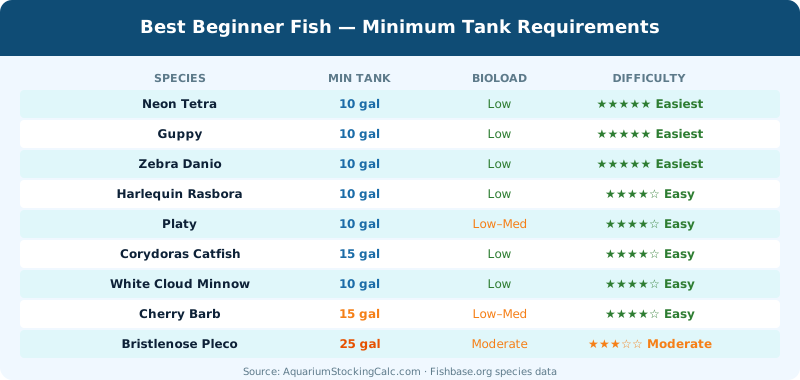
The best beginner fish aren't just pretty. They're hardy enough to handle minor water chemistry variations, peaceful enough for a community tank, and forgiving enough that early fishkeeping mistakes won't immediately end in losses. After years of fishkeeping experience, these 10 species consistently perform best for new hobbyists.
Before choosing fish, run your planned stocking through our aquarium stocking calculator to confirm your tank and filter can support your choices. The species below include minimum tank sizes and bioload notes to help you plan.
1. Neon Tetra
Min tank: 10 gallons | School of: 6+ | Bioload: Low | Temp: 70–81°F
Neon tetras are the quintessential beginner community fish: small, peaceful, low bioload, and visually striking with their red-and-blue stripe. They're schooling fish that need a group of at least 6 to feel secure; solo or pairs result in stressed, shy fish that hide constantly.
They're not completely bulletproof (they're sensitive to temperature swings and brand-new tanks), but in a cycled tank with stable water parameters, they thrive for 5–8 years. Cardinal tetras are similar but prefer slightly softer, more acidic water. Stick to neon tetras if you're on hard tap water.
2. Guppy
Min tank: 10 gallons | Keep: 4–6 | Bioload: Low | Temp: 72–82°F
Guppies are the most popular freshwater fish in the world for good reason: they're colorful, active, nearly impossible to kill, adapt to a wide range of water conditions, and breed readily in captivity. That last point is also their downside; females can store sperm for months and produce 20–60 fry every 4 weeks.
If you don't want to deal with fry, keep males only. A group of 4–5 males in a 10-gallon tank is active, colorful, and easy to maintain. Avoid keeping guppies with bettas; betta fish will attack the flowing fins.
3. Zebra Danio
Min tank: 10 gallons | School of: 5+ | Bioload: Low | Temp: 65–77°F
Zebra danios are probably the hardiest fish on this list. They tolerate cooler water (down to 60°F in some cases), wide pH ranges (6.5–7.5), and are often used specifically to cycle new tanks because of their resilience. They're fast, active midwater swimmers that need open space and a school of at least 5.
Their toughness makes them an excellent choice for a first tank. If something goes wrong with your water parameters, zebra danios are usually the last fish affected and the most likely to recover.
4. Harlequin Rasbora
Min tank: 10 gallons | School of: 6+ | Bioload: Low | Temp: 72–77°F
Harlequin rasboras are underrated. They're more peaceful than danios, more colorful than zebra rasboras, and very forgiving of beginner water keeping. The distinctive black triangular patch on their rear half makes them easy to identify and visually interesting in groups.
They pair well with neon tetras (similar water requirements) and corydoras catfish. A group of 8–10 in a 20-gallon planted tank makes an excellent first community setup.
5. Platy
Min tank: 10 gallons | Keep: 3–5 | Bioload: Low-Medium | Temp: 70–82°F
Platies (and their close relatives, mollies and swordtails) are livebearers like guppies, but they're a bit hardier in harder, more alkaline water. They come in dozens of color varieties and are very tolerant of beginner mistakes. Males can be slightly aggressive with each other; keep a 2:1 female-to-male ratio if keeping mixed groups.
Avoid mollies for very first tanks; they're sensitive to ammonia spikes and prefer slightly brackish water. Platies and swordtails are more forgiving.
6. Corydoras Catfish
Min tank: 15 gallons | School of: 3+ | Bioload: Low | Temp: 72–79°F
Corydoras are bottom-dwelling catfish that do no harm to tank mates and actively clean up uneaten food from the substrate. They're social fish that need at least 3 (preferably 5+) of the same or similar species. Peppered corydoras (C. paleatus) and bronze corydoras (C. aeneus) are the most widely available and easiest to keep.
They're sensitive to sharp substrate (use sand or smooth gravel to protect their barbels) and to salt in the water, but otherwise they're quite easy. In any community tank, 3–4 corydoras are excellent tankmates.
7. White Cloud Mountain Minnow
Min tank: 10 gallons | School of: 6+ | Bioload: Low | Temp: 60–72°F
White clouds are the best cold-water beginner fish. They thrive at room temperature without a heater (60–72°F), making them ideal for unheated tanks or seasonal setups. They're peaceful, colorful, and hardy, often described as "the poor man's neon tetra" in terms of appearance.
They can't handle warm tropical tanks (above 74°F long-term), so they work best as a species-only tank or with other cool-water fish like goldfish (in a larger tank) or danios.
8. Otocinclus Catfish
Min tank: 10 gallons | Group of: 3–5 | Bioload: Low | Temp: 72–79°F
Otocinclus are tiny (1–2 inch) algae-eating catfish that vacuum green algae off glass and plant leaves without touching your plants. They're peaceful, efficient, and fascinating to watch. The catch: they need an established tank with real algae growth and don't handle ammonia spikes well. Not for brand-new tanks.
Add otocinclus after your tank has been running for 2–3 months with visible green algae. They're best in groups of 3+ and may need supplemental algae wafers if your tank is too clean.
9. Cherry Barb
Min tank: 15 gallons | School of: 6+ | Bioload: Low-Medium | Temp: 73–81°F
Cherry barbs are one of the few barb species that's genuinely peaceful enough for a community tank. Males turn bright red when displaying, making them a colorful addition to a planted tank. They're hardy, adaptable to a wide pH range (6.0–8.0), and school loosely.
Other barb species (tiger barbs, for example) are notorious fin nippers and shouldn't be kept with slow-moving fish or fish with long fins. Cherry barbs are the exception: peaceful, community-safe, and easy to care for.
10. Bristlenose Pleco
Min tank: 25 gallons | Keep: 1 | Bioload: Moderate | Temp: 73–80°F
Bristlenose plecos are the best algae-eating bottom fish for tanks 25 gallons and up. At 4–5 inches as adults, they're much more manageable than common plecos (which reach 18+ inches and belong in a pond, not a fish tank). They're peaceful, hardy, and will keep your glass and décor noticeably cleaner.
They do produce moderate bioload, so factor them into your fish count calculations. Use our fish tank capacity calculator to see how a bristlenose affects your overall stocking level.
Stocking a Beginner Tank
Once you've picked your species, use our aquarium stocking calculator to build a specific plan. A well-thought-out first community tank might look like: 6 neon tetras + 4 harlequin rasboras + 3 corydoras in a 20-gallon tank with good filtration. That's a balanced, low-bioload setup that's visually interesting and very forgiving.
Start with half your target fish count, let the tank stabilize for 2–3 weeks, test water (API test kit, not strips), then add the rest. Read our nitrogen cycle guide before adding any fish.
AquariumStockingCalc Team
We build accurate, science-based aquarium calculators for hobbyists and professionals.
Related Guides
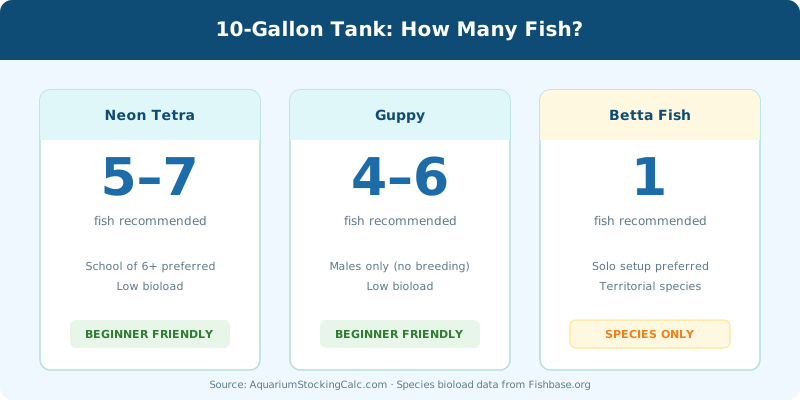
How Many Fish Can Live in a 10-Gallon Tank?
A 10-gallon tank can hold 5–8 small fish, 1 betta, or 1–2 dwarf cichlids, bu…
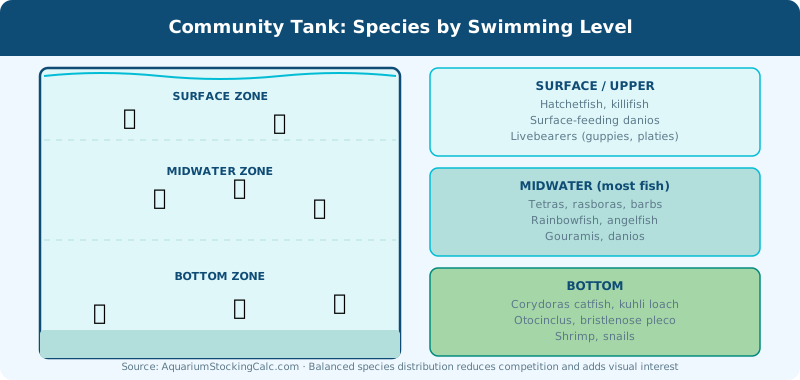
How to Set Up a Community Fish Tank: Species Compatibility Guide
A thriving community tank requires compatible water chemistry, temperament, …
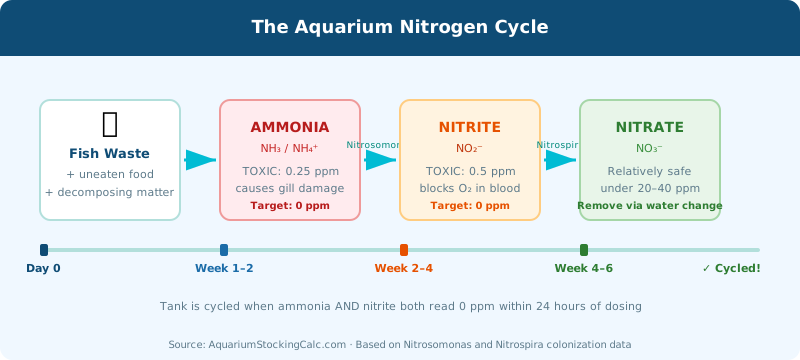
The Nitrogen Cycle: Why It Matters Before Adding Fish
The nitrogen cycle converts toxic ammonia into safer nitrate via beneficial …